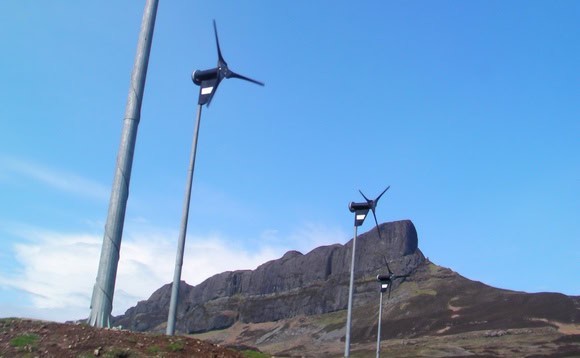
The response to the rising unrest about the experience of the onshore renewables industry in Scotland has led to renewed calls for community ownership of the energy technology that communities are host to.
The Scottish Community Coalition on Energy, comprising Community Energy Scotland, Community Land Scotland and the Development Trusts Association Scotland, have issued a manifesto of six recommendations ahead of next year’s Holyrood elections. They write:
‘There is growing opposition to new clean energy infrastructure, threatening Scotland’s climate targets and the UK’s clean power targets. The UK Government plans to build the majority of new onshore wind capacity before 2030 in Scotland, but 53 community councils in the Highlands recently supported a joint statement calling for a pause on energy infrastructure developments, and 10% of Scots are against the development of onshore wind.
To build public support for renewables and the energy transition, we must enable and support increased community ownership and shared ownership of new and existing electricity and heat infrastructure, and fair distribution of the wealth that is being generated and consolidated through renewables.
64% of the Scottish public would support a community-owned renewables project in their area, compared to 40% support for a private project. This is partly due to financial benefit: on average, community-owned windfarms provide 34 times more financial benefit per MW (and sometimes more) to the local community than private windfarms. However, equally important is that communities feel a sense of control and involvement in the energy transition. Community energy projects drive sustainable behaviour changes and help ensure a just transition for all.’
This analysis chimes with what we’ve been hearing from independent media representing rural communities as part of the Scottish Beacon’s Power Shift project [The Power Shift: Investigating Scotland’s Green Energy Boom – The Scottish Beacon].
The Scottish Community Coalition on Energy’s (SCCE) six recommendations are as follows:
1. Increase the CARES funding package for community energy to £15m/year, rising each year. The Scottish Government’s Community and Renewable Energy Scheme (CARES) supports communities to engage with, participate in and benefit from the energy transition to net zero emissions. CARES offers a range of financial support to local energy projects.
2. Use public land to boost community-owned energy. When public bodies like Forestry and Land Scotland (FLS) lease land for renewables development or repowering, they should prioritise applications from community companies.
3. Consult on amending planning legislation to prioritise the use of land for community-owned energy over privately-owned energy, and to ensure that onshore renewables and storage developments up to 50MW provide a fair deal for local residents.
4. Update the National Framework Agreement for the Supply of Electricity to allow local authorities and other public bodies to buy energy direct from community energy groups. This would mean lower costs for the local authority and a guaranteed income for the community group, retaining wealth in the community.
6. Establish a Scottish Community Wealth Fund to equitably distribute a portion of the wealth being generated by Scotland’s natural renewable resources. This is a transformative policy that could excite the public about the energy transition, increasing buy-in and promoting a just transition, as well as providing finance for increased community energy ownership. This Fund would not be managed by the Scottish Government, but their role is to give the proposal their support and encourage or incentivise developers to contribute to the fund.
You can read the full manifesto HERE.
Scotland’s share of community-owned renewable energy is minuscule next to our northern European neighbours, so we are starting from such a small base. In this context some of these proposals seem modest. For example, the proposal to increase the CARES funding package for community energy to £15m/year is a rise of only £2m. In the scheme of things that’s not very ambitious. However, their first ask is a target of 1GW of community-owned energy by 2030. That’s 10x higher than now.
These proposals are to be welcomed, and give some detail and road-map for the policy-makers to follow. It seems we are at a fork in the road where there will either be a significant investment in and commitment to community ownership of renewables or the entire project will be in severe jeopardy.