In 2019, the Scottish Government declared a climate emergency and set a net-zero target for 2045. Renewable energy became key to its aims, bringing the ScotWind round of seabed leasing for commercial-scale offshore generation. But the Scottish Government did not assess the impact on the countryside of associated electrical infrastructure before those ScotWind leases were awarded.*
That job was left to the planning process.
Now, a Stonehaven councillor has said she is unhappy with a planning process that prevents her from looking at the full renewable energy picture for the area – and concerned at the prospect of the character of Fetteresso Forest, near Stonehaven in Aberdeenshire, being fundamentally changed.
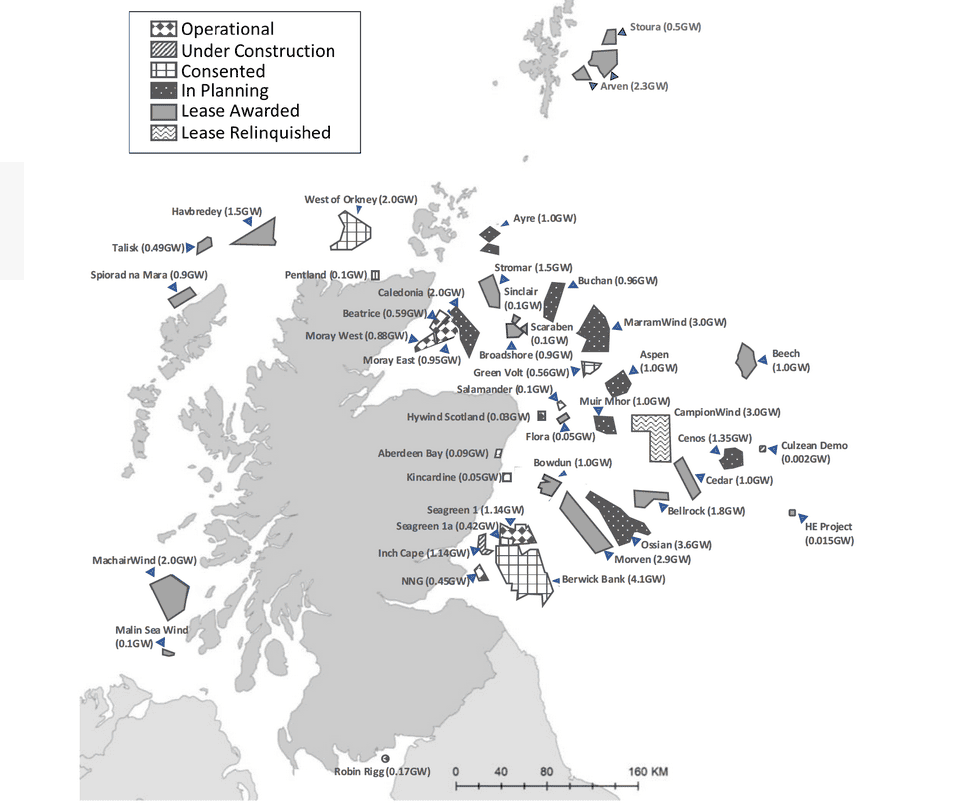
At a meeting of Aberdeenshire Council’s Kincardine and Mearns Area Committee on 27 October, members were asked to consider and comment on Thistle Wind Partners’ application for planning permission in principle for the Bowdun Offshore Wind Farm’s onshore infrastructure. The application is due to be determined by the council’s Infrastructure Services Committee later this year.
Along with a landfall and cable corridor, the Bowdun project requires a dedicated substation the size of 10 rugby pitches, with buildings measuring up to 15m in height. A 1.3km cable will then link to SSEN’s proposed Hurlie substation – the national grid connection point. That substation is even bigger, at 20 rugby pitches, with more buildings up to 15m high.
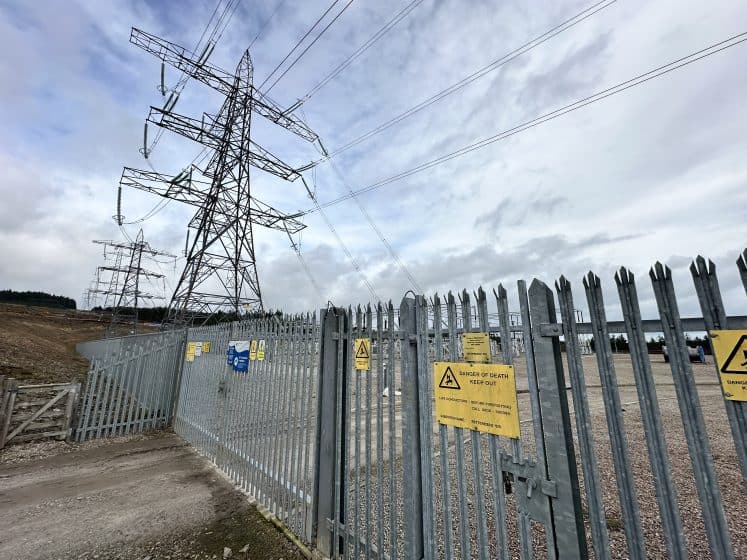
Other renewable generation and infrastructure projects are in the offing and could transform Fetteresso Forest into an electrical hub, with connections for Glenskinnan Renewable Energy Park and Glendye and Craigneil Wind Farm. The proposed Kintore to Tealing 400kV overhead line, meanwhile, would tower over the treetops, with pylons measuring up to 75m.
Further on the horizon are other offshore projects, namely Aspen and Bellrock Offshore Wind Farms. While these have agreed grid connections at Hurlie – and can be found on the National Energy System Operator’s spreadsheets – they are not yet in the planning process, so cannot be included in councillors’ assessment of cumulative impact.
‘There is cumulative impact’
Speaking at the meeting, Cllr Sarah Dickinson said: “I think there is no question that one wants to be able to support renewable energy and understand the reasons for it but this will result in some really difficult decisions wherever these sort of applications come forward.”
Some difficult decisions have already been made, causing disarray for developments the Scottish Government considers of national importance.
The proposed Hurlie substation was refused planning permission by Aberdeenshire Council earlier this year and is now the subject of an appeal that has been called in for determination by Scottish ministers.
The 400kV Tealing to Kintore line, meanwhile, is the subject of a public inquiry after Angus Council objected to the scheme.
Back at the council meeting in Stonehaven, Cllr Dickinson noted the importance of robust and enforceable conditions if the application were to be approved, but went on to set out why she felt it should not be supported.
She said: “I do have concerns around cumulative impact. I know I am limited to the list in front of me – Hurlie, Fetteresso Wind Farm, Glenskinnan, Craigneil and TKUP.
“And we can’t take account of other things. There is a whole level of that, which we are forced to do, that I find unreasonable when we know these other applications are very likely to come forward.
“But even with what is here, there is cumulative impact.”
Cllr Dickinson said the situation could perhaps be mitigated by the developer avoiding single large sheds and if the role of forest management was clarified. Over time, a network of paths would be re-established – but she felt the changes would be too great.
She said: “We fundamentally will over time will have a fundamental impact on the landscape character, which will be there. The landscape character will have been altered. I’d certainly ask that the Infrastructure Services Committee considers that very closely, as that leans into me not being happy with this going ahead.
“I feel the change across that landscape is going to be significant, and it sits on the character as much it sits on the visual impact. And because the character is changed it then sits on the recreational amenity, which is a consideration within Policy 11 of NPF4.
“And that character change will be there the whole time for everybody trying to enjoy the amenity they previously enjoyed through the forest area.”
Cllr Dickinson, who chairs the Area Committee, reviewed the comments and concerns raised earlier in the meeting. While the committee had reached no settled view, she concluded that the Infrastructure Services Committee had feedback it should closely consider before determining the application.
How are the impacts of offshore wind developments assessed?
The ScotWind leases were awarded after the Scottish Government prepared a Sectoral Marine Plan, which identified the most suitable locations, known as Plan Options, for commercial-scale offshore wind energy.
In terms of onshore infrastructure, the Sectoral Marine Plan states:
“Due to the level of uncertainty surrounding potential cable routes to shore, landfall locations and grid connection, a detailed assessment of specific cable routes to shore has not been included in the Sustainability Appraisal.
“The Stategic Environmental Assessment, Habitats Regulation Appraisal, Socio Economic Impact Assessment and Regional Location Guidance assume that any area inshore of a Plan Option could be utilised as a cable route and identifies areas of higher sensitivity for cable routes and landfall points. Developers are expected to take into consideration sensitive areas at a project-planning level and undertake early engagement with key stakeholders regarding survey requirements, cable routing and burial/protection methods.”
A Scottish Government spokesperson added:
“The SMP, which sits within the marine planning system, provides a high-level assessment of the potential environmental effects likely to result from offshore wind development.
“While it considers some interactions between offshore development and the coast at a strategic level, the landscape impacts of project-specific onshore infrastructure (e.g. substations, cable routes) are assessed through terrestrial planning and Environmental Impact Assessment processes once detailed proposals have been developed.”