This is the third in a regular column on permaculture, biodynamics, and reading the rhythms of the land in Galloway. Paul Clarke is the founding director of Naturally Smart CIC at Hensol Wood, outside Mossdale.
The hazels along the track caught me out again.
I went up with an empty bag and great expectations on Tuesday 25 August, which according to my notebook is a good week earlier than I have ever done before, and found the ground beneath the hazels scattered with green husks, each one chiseled open neatly and emptied.
The abundant source of just a few days earlier was gone. Above me a red squirrel was working through the canopy without any particular urgency. I stood there a while and we looked at each other, then it nonchalantly returned to harvesting. I took the point and went home.
I will not however, be filing this encounter in my notebook under another of my many failures. The squirrels are clearly reading skilfully that which I keep missing. They don’t wait for a nut to look ready, they wait for the kernel to fill, and they can judge that from the outside in a way I have never managed to do.
So what I take home instead of cobnuts is a different date for future reference, assuming I want to deprive the reds of their winter food preparations. For me it’s a little luxury, but for them it’s a mainstay over winter.
More notable through the observation is the realisation that if the reds are stripping the hazels in mid-August, we can justifiably argue that the year is running ahead of itself, and everything downstream of that will be running ahead too. The squirrel and nut encounter told me more about the season than the calendar.
And running ahead it has been. The plums came in heavy, early, and small, which is the signature of a tree that set a generous crop in a warm spring and then had to raise it on short water supplies.
Sugars concentrated to the point of popping the skins, skins themselves were wrinkled and tough, stones large in proportion. They are good for eating, but poor for keeping.
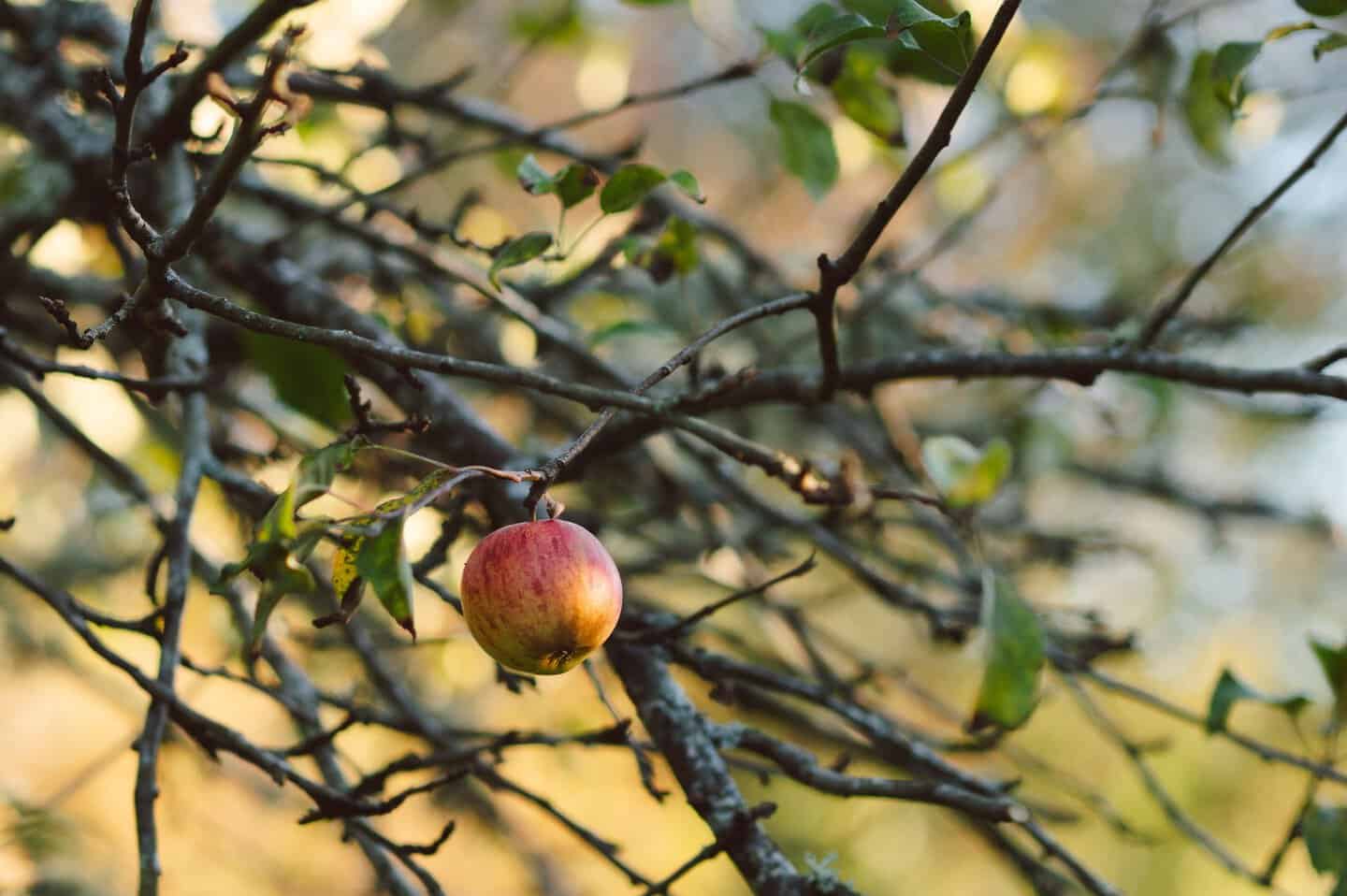
The apples have gone the same way, with early varieties dropping before I was ready for them and notably rotting very quickly. One tree dropped a third of its crop in a week without any notable wind. That is a tree doing the measurements and deciding it cannot carry on with its season’s load, given the ground conditions.
The arithmetic is worth spelling out, because it explains most of what has gone wrong and quite a lot of what has gone right over this strange summer. On the twenty-first of August the Scottish Environment Protection Agency (SEPA) moved the Galloway Dee and the Urr Water into Significant Water Scarcity, the top of their four-step scale.
The gauge at Dalbeattie, which is the reference for both, has now recorded more days of very low flow than in any year for two decades. We had thundery rain a few days before that and some rivers twitched in response, but the overall picture barely shifted.
SEPA’s own comment on it was blunt: when a river has been low for weeks, a few wet days do not change anything. Recovery needs sustained rain falling in the right places and we aren’t seeing that yet. That is the difference between rainfall and water, and it is the whole lesson of this year. Ground that has been baked shut sheds a heavy shower almost entirely.
I watched it happen on the track below the barn, where an inch of rain in an afternoon arrived at the bottom gate as run-off within twenty minutes and left the soil six inches down as dry as it had been that morning. The same storm fell on the mulched beds and simply vanished into them.
So what of the lessons learnt from this growing season? What managed to grow well this year was anything with a living roof covered over the soil. Deep-mulched beds, the woodland-edge planting, the older fruit trees with grass and comfrey around their feet rather than bare ring-weeded circles.
What suffered was everything I had left open and everything I had planted in the last two seasons, because a young tree has no reserves to draw on and no root depth to reach with. I lost two of a group of five apples I put in during the early spring, which is a straightforward consequence of planting into a warming climate and then not committing to water them through their first three summers. That error is on me.
We have already enjoyed the mellow fruitfulness this autumn. It is the extended mists we seem to have gone short of; they are currently light and early in the morning and hover mainly on the already wetter ground as we would expect, the drier spaces barely getting a glimpse.
Which brings the work of the coming weeks into sharp focus, and it is mostly about catching what water falls. The Met Office outlook to mid September points to a changeable, often unsettled spell with rainfall likely above average in the west, and some strong winds along with it, though they are careful to say the signals are weak and confidence is low.
Take it as a reasonable bet rather than a promise. Either way, autumn and winter rain is what recharges the ground for next summer, and this year has shown us exactly how little slack the system has left.
So: jobs to do…
- Gutters cleared and downpipes checked before the first real windy days which will drop the autumn leaves fast this year in all likelihood and refill the gutters; the rinse and repeat of the gutters will pay dividends in every tank and water butt (once emptied of any sludge and made ready) as they will refill and be ready for use
- Sort out gutter leaks and drips now rather than in the cold of February
- Find additional storage and capture systems for water if possible and try to locate them where you observed it was absent this year
- Leaves can be gathered and stacked to rot down rather than binned
- Soil covered before November, whether with a green manure, a mulch, or simply whatever the season has already dropped will hold the moisture well into next year
- Get the woodpile brought under cover
- Get your new tree planting areas prepared in advance of the early winter planting window before the frost
- Save seed from what actually performed this year as it begins to give you your own hardy resource; this season was a test paper, and a few things in the garden passed it, so the seeds from this year are an important set to keep for future use
Enjoy the last of the summer sunshine and relish the return of the darkest dark skies.