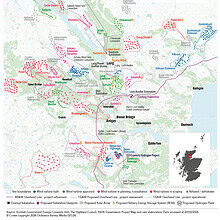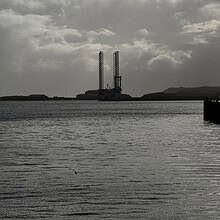
Shetland is the windiest region in the UK if not in Europe, and the wind industry is loving it. Thanks to a 600MW subsea cable and the prospect of another, much larger, such cable, the renewables industry is turning the islands upside down.
No surprise then that, thanks to its “world-class wind regime”, the islands now have the highest density of installed megawatts per person anywhere in the UK.
Yet, despite hosting one of the largest and, allegedly, the most productive, onshore wind farms in the UK, fuel poverty levels are rampant while the cost of living is 20-65 percent above the rest of the UK mainland.
And it’s the same wind-producing load factors of 50 percent for the wind industry that sucks the heat out of Shetland’s homes. The effect of that persistent bone-chilling wind – January 2026 was a particularly good example of that – needs to be experienced to be fully understood.
Shetland Islands Council estimates that almost 7,000 of the islands’ 10,421 households are living in fuel poverty – two out of every three households. A staggering 3,475 households are in extreme fuel poverty, meaning these households spend at least 20 percent of their income to keep warm.
The numbers have been growing rather than decreasing in recent years, with 830,000 fuel-poor Scottish households (33 percent) estimated in December 2025 despite – some would say because – more and more renewable energy projects are being built, not only in Shetland, but across the country.
Shetland Islands Council’s political leader Emma Macdonald, now the isles’ parliamentary candidate for the Liberal Democrats, said the council was taking “every opportunity” to remind the government that the current set-up was unfair and that local communities needed to benefit in a more tangible way.
Macdonald has recently expressed her disappointment at the Scottish Government’s “underwhelming” proposals to increase the level of community benefit expected to be paid to the local community from £5,000 to £6,000 per megawatt per year.
So, who is benefitting from Shetland’s and Scotland’s wind?
The SSE Renewables’ owned Viking Wind Farm (443 MW) can potentially – if it is not curtailed – generate enough energy to power almost 500,000 households.
With 103 turbines, SSE pays more than £2.2 million per year into the Shetland Community Benefit Fund (SCBF), in accordance with the Scottish Government’s suggested baseline of £5,000 per MW. The project will also return up to £2 million (so far unconfirmed) to the Shetland Charitable Trust (a locally owned community wealth fund) for its initial £10 million investment in the project.
By comparison, the 4.5 MW Garth wind farm, owned by the 160-strong community of Cullivoe in North Yell (in Shetland), generates on average £2 million per year with just five much smaller turbines.
In other words, one Viking turbine (4.2 MW) will return around £40,000 per year to Shetland’s two community funds, along with local jobs, business opportunities and income to landowners and crofting tenants.
One wind turbine from Garth (0.9 MW), is generating up to £720,000 at full capacity, while also supporting jobs and valuable community initiatives in North Yell.
With public opinion in the Highlands and Islands of Scotland increasingly turning against further industrialisation with green energy infrastructure, could ensuring a fairer share of the revenues from these projects be one way forward for the energy transition to regain a positive momentum? And if so, how could that be achieved?
A visit to the Åland Islands
A look across the sea to our Nordic neighbours shows how communities can benefit from large-scale wind projects.
The archipelago of Åland is an autonomous region of Finland nestled in the Baltic Sea. Roughly the same size and population as Shetland, the reality here is very different.
Despite being a small island group of 30,000 people, local democracy here is strong, according to Yvonne Österlund, senior engineer at the Department of Infrastructure at the Government of Åland.
Since 1920, the region has been self-governing not only through the Åland Parliament (Lagtinget), but also 16 councils spread across the islands.
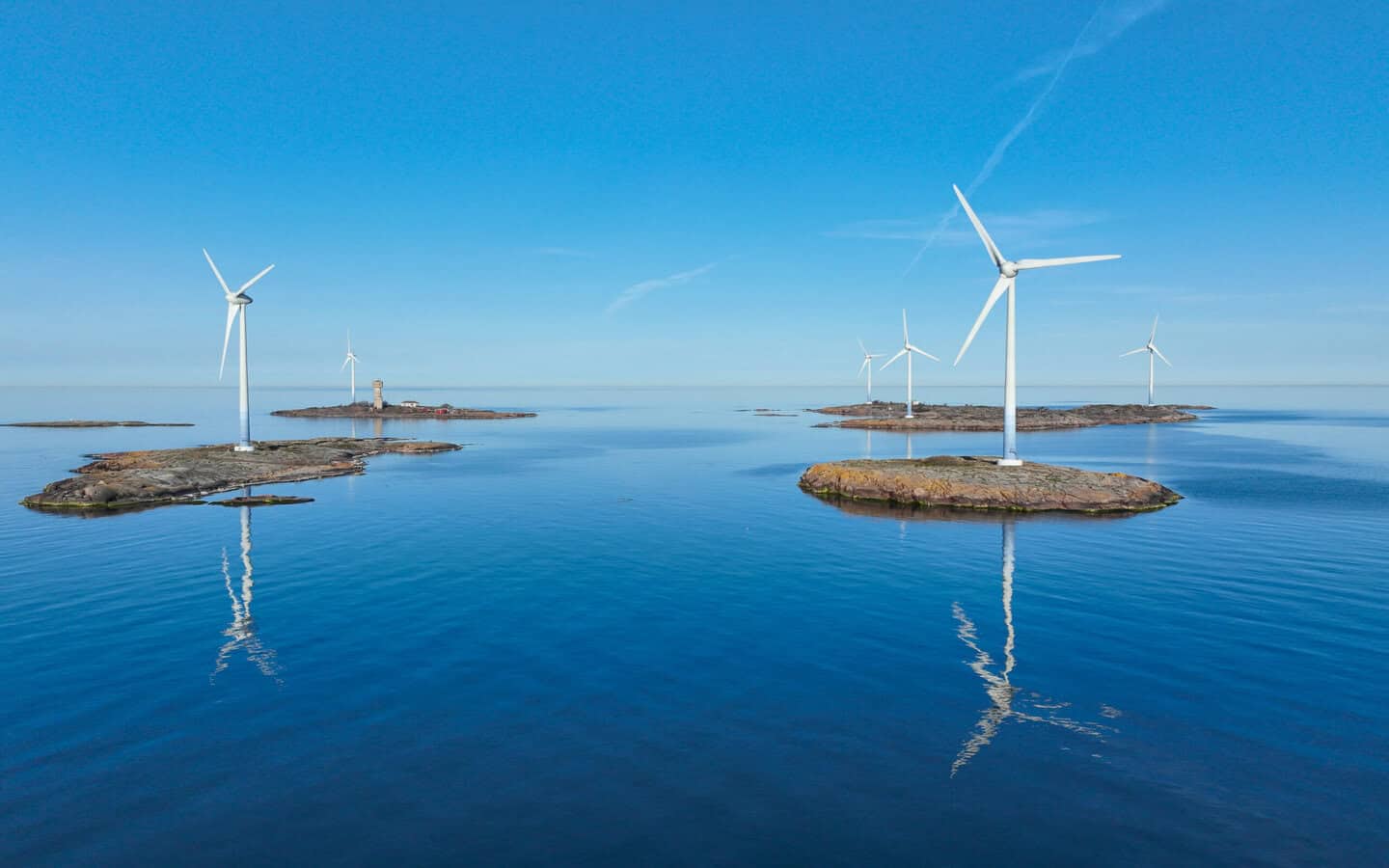
Given their geographical location, the islands have become particularly interesting in the path towards a green transition, with several wind farms being built or planned both on land and sea.
Unlike Shetland, however, Åland is administered by a government with its own legislative powers, which also include matters such as the environment, energy, planning and construction.
“The wind power we have in Åland is owned by Ålanders and contributes to the energy mix in Åland,” Österlund said.
Meanwhile, Daniel Gear of Lerwick-based energy consultancy Voar, described the learning from a visit to “this modern, prosperous, self-governed island community” in 2024 as “totally illuminating”.
“It did put into stark relief just how far Shetland is trailing behind the Nordic pack – in terms of our ability to protect our own economic and cultural interests,” he said.
“Like Shetland, Åland appears set to host a significant boom in offshore wind. Unlike Shetland, this will only happen on their terms.
“There are 16 municipalities, the equivalent of Shetland’s parish councils… but these are parish councils on steroids, with no shortage of administrators who enjoy prestigious and well-remunerated roles.
“Municipalities have the power to control planning and to levy taxes within the land and waters of their municipality, right out to Åland’s territorial limits.”
There is currently 65 MW of wind power with 28 turbines across different locations, all connected to the local electricity grid. The surplus electricity is sold to Sweden.
These include smaller wind farms such as Båtskär (14 MW), as well as larger projects such as the 10 turbine wind farm Långnabba (40 MW).
And there are many more, and much larger, projects in the pipeline: among these, the Sunnanvind offshore wind farm project (up to 4,000 MW), developed by the Åland Government to maximise the benefits for the islands.
The project, once realised, is expected to generate stable revenues to the local government through leasing and auctioning the waters. In addition, the six local councils nearby will receive property taxes from the turbines in their area.
Stormskär & Väderskär (2,460 MW) is another offshore project being developed in the same area by the Finnish company Ilmatar.
If approved, the wind farm is expected to return at least £635 million over 25 years in various forms of taxation, including property and energy tax, to the local government and municipalities, and is expected to grow Åland’s annual GDP by 1.5 percent throughout its lifetime.
“What is special here is that we own the water,” Österlund said. “It is not Finland that has authority over the waters around Åland, but Åland itself.”
And unlike Shetland it is not the national state that auctions off the marine areas around the islands, but Åland’s local authority itself.
“This will strengthen public resources, which can then be distributed according to the political majority for the benefit of development and the population,” she added.
Gear explained: “As it stands, Shetland is not on an equivalent footing when it comes to control of developments within our (theoretical) ‘territorial limits’ and we have no legal mechanism to direct developer payments into the host community, beyond those which we can earn by providing services as the nearest landfall, host site, or through a voluntary contribution from the developer.”
Opportunities also exist for citizens in Åland to buy shares in wind turbines through ÅVA (Ålands Vindenergi Andelslag), an association born in 1994 to offer shared ownership of Åland’s wind farms to locals, currently holding 1,500 members. By buying a share at the cost of 470 euros, individuals, organisations and municipalities alike can receive interests or discounts on electricity prices.
Scotland’s Nordic neighbours are leading the way in developing renewable energy projects that are also benefiting local people and communities. Will those lessons be taken on board by candidates aspiring to become Scotland’s next MSPs?
Some of the estimates and data in the feature have been taken from the Social value from renewables in the Highlands and Islands report by Equitable Energy Research (EER), a not-for-profit created to help local communities navigate the renewable energy sector with confidence.
This article is from our print magazine The Power Shift.
If you would like to receive a copy of The Power Shift magazine, you can order online here.
If you are interested in joining the new Environmental Journalism Network that is open to journalists, campaigners, researchers and experts, sign up here.