More than 20 wind farms are failing to pay an agreed amount to locals. That could cost Scottish communities over £50m.
Since 2014, the Scottish Government has recommended that onshore wind developers pay £5,000 to nearby communities each year for every megawatt installed. The government has recently proposed increasing it to £6,000 – but both this and the existing rate are considered too low by many campaigners. Although voluntary, virtually every wind farm makes some contribution and these payments are considered part of being a “good neighbour” to impacted communities.
Analysis of a publicly available database shows more than 20 onshore projects built in the last decade – including some owned by European governments, Scottish energy giants, and global financial firms – are paying less than the £5,000 figure. Together, these projects deliver £2m less every year than if they met the benchmark. Over the average 25-year lifetime of a wind farm, that shortfall adds up to over £50m.
Many of the projects paying beneath the threshold will still operate into the 2040s, meaning nearby communities will receive lower payments for decades. One community representative said they were facing “acute injustice” as a result.
An industry representative told The Ferret that ‘community benefit’ payments now cost developers “twice as much” as they did in 2014, and said many projects are on the edge of financial viability due to rising costs.
Despite that, trade body Scottish Renewables claimed there was still “exceptionally high compliance” with the Scottish Government guidance and noted that payments were delivered “on an unrivalled scale to any other sector.” However, campaigners and politicians argued those near these wind farms were being given “meagre compensation” for living with the disruption and impact on landscapes that turbines cause.
One said our findings showed the system was “not fit for purpose” and communities were missing out on funds due to the “whim of developers.”
Onshore wind farms have expanded rapidly across rural Scotland this century. Community benefits are meant to ensure those living nearest turbines receive a fair share of the value created by the use of local land and resources. The wind industry says the funding has made a real difference: more than £200m has been paid out since the 1990s, supporting projects including transport schemes, sports clubs, play parks, food parcels, and services for people with disabilities.
Underpayment persists
Our analysis shows not all projects built since 2015 are paying the expected amount, despite the 2014 Scottish Government guidance applying to “all renewable energy developments in Scotland which are not yet operational.” Using official figures compiled by Local Energy Scotland, The Ferret has identified 21 wind farms built between 2015 and 2025 paying less than the £5,000 benchmark.
Developers argue community benefit packages are usually agreed early in the planning process and are difficult to change once financing is secured – meaning some might have been decided before 2014. However, the £5,000 figure was already considered the industry standard before that year.
Eight of the projects paying below the figure were given planning permission in 2014 or later. Others were approved earlier but not built until years later, long after expectations around community benefit had changed.
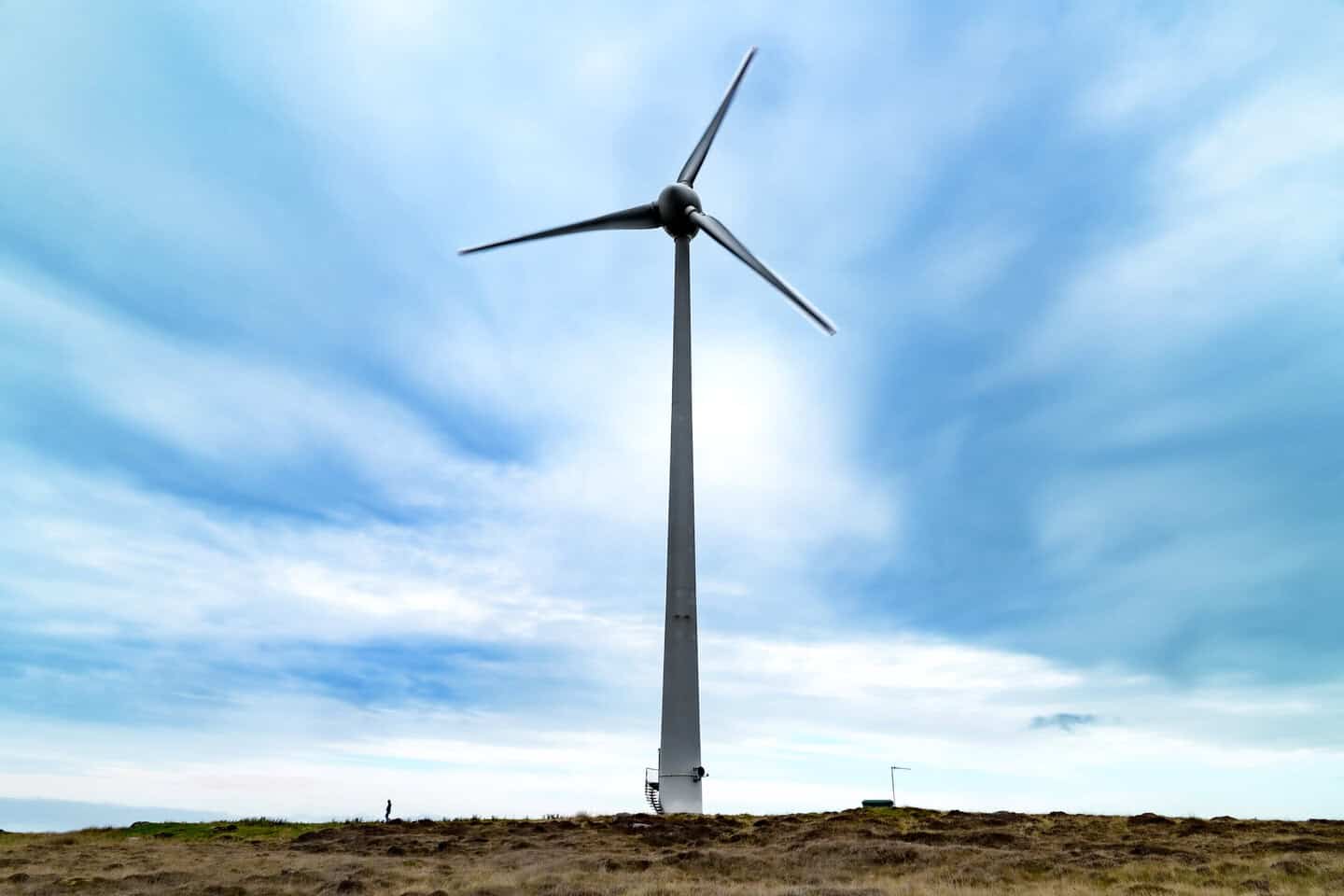
The largest project paying below the benchmark is the 177MW Dorenell wind farm in Moray, made up of 59 turbines, each 126 metres tall. Dorenell pays £2,525 per megawatt each year, just over half the benchmark. Over 25 years, communities around the site will receive almost £11m less.
EDF, which owns Dorenell, claimed the Local Energy Scotland data used by The Ferret is “misleading” because it ignores a “range of other investment” provided through the project, including an endowment for the local community, annual contributions to the local authority, and a dedicated ranger service and visitor centre.
Patti Nelson, chair of the Cabrach Community Association, said the low funding had caused locals “sustained consternation.” She added: “With a remaining lifespan of over 20 years, we’ll continue to strongly push EDF on the need to rebalance this acute injustice and purposeful underinvestment in this community.”
Several other projects paying below the benchmark were developed by major energy players, including state-backed companies and multinational investors. Among them are Andershaw in South Lanarkshire, Corriegarth in the Highlands, Black Law (ScottishPower), and A’Chruach in Argyll, which pay significantly below the £5,000 benchmark despite being approved or coming into operation after 2014.
Campaigners call for change
The findings come amid a push to raise expectations for future projects, particularly in areas hosting large numbers of turbines. Renewables companies argue many onshore wind projects operate on tight margins and higher payments could stop developments going ahead.
In 2024, Highland Council proposed a ‘social value charter’ to raise expected community benefit payments for new wind farms to £12,500 per megawatt. Under the proposal, £5,000 would still go to communities closest to wind farms, while £7,500 would be paid into a ‘strategic fund’ to support projects across the Highlands. Council leaders said the charter reflects the scale of renewable development in the region and aims to ensure Highlanders see lasting benefits. The renewable energy industry has strongly opposed the proposal, warning it would make many projects unviable.
Research by consultancy Biggar Economics suggested the proposals could reduce both community benefit payments and jobs linked to new wind developments, because 80% of planned wind farms in the region might not go ahead.
Some support such measures. Liberal Democrat MP Angus Macdonald said he would back a “halt” to new renewables projects unless community benefit payments were increased. He argued payments should rise to at least £12,500 per megawatt or be linked to a five per cent share of a wind farm’s revenue. Without that uplift, he claimed, communities were being asked to host major infrastructure for “meagre compensation.”
Flick Monk of Platform London said the current system of community benefit payments is “not fit for purpose” and communities are missing out due to the “whim of developers.” She added: “It’s no wonder that communities are increasingly turning against renewable energy when developers treat them with such disdain.”
Josh Doble, director of policy at Community Land Scotland, called for a “transparent and proportionate discussion” about how benefits from onshore wind are shared. While developers meeting the benchmark should be “congratulated,” the sector needs to “ensure payments are made fit for 2026 and reflect the scale of development happening across rural Scotland.”
Morag Watson, director of onshore wind at Scottish Renewables, said the sector was “proud of its positive record” on community benefit funding, which has been “transformational” in many communities. She noted that changes to UK subsidy systems mean community benefit now costs developers twice as much as it did in 2014, “equivalent to 15–20 per cent of developer profits.”
She added: “Many onshore wind projects are now on the very edge of financial viability due to rising costs, leaving less money to support communities. While community benefit funds do represent an important and visible contribution, we should not lose sight of the wider public good delivered by onshore wind projects, including local supply chain and workforce growth, nature enhancement, and the protection renewable energy provides consumers against the volatility of global price shocks.”
All of the companies named in this piece were contacted for a response.
—————-
The Ferret is an independent investigative site funded by readers who believe Scotland
deserves better journalism. Join them. [qr code]
This article was originally co-published by The Ferret and the Sunday National. It forms part of The Ferret’s ‘After Oil’ series which is examining whether the Scottish Government is achieving a ‘just transition’.