Hope, but with a warning
I was worried about how the Scottish Parliamentary Election results were going to turn out.
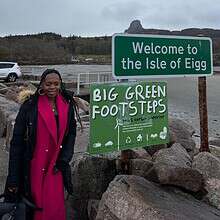
I’m a Black woman who has made Edinburgh her home for over thirty years and it’s worrying that hate and division are on the rise. Bigotry of every kind is now becoming acceptable under the guise of ‘free speech’ and polarisation of position is becoming the norm.
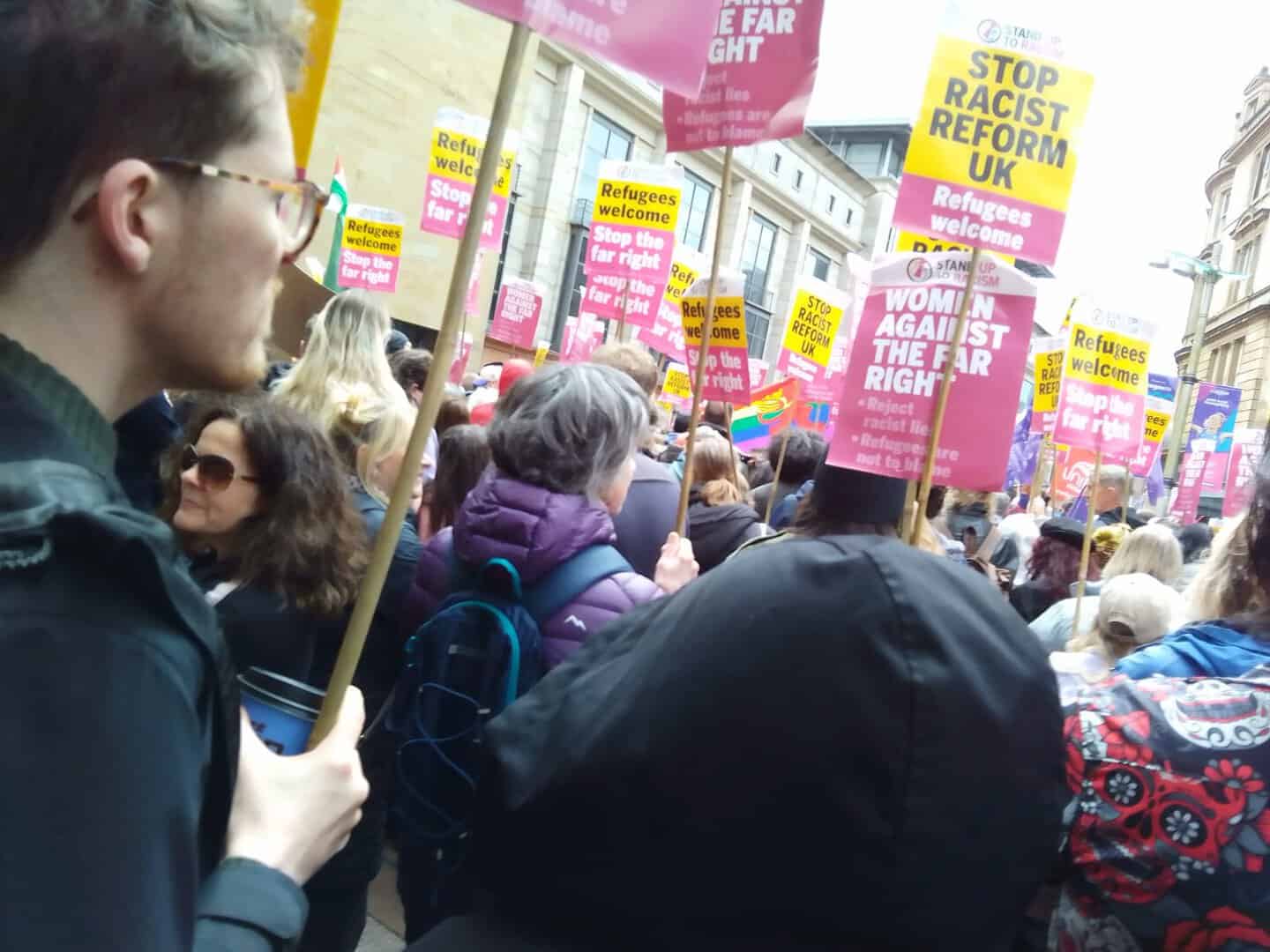
So I’m proud that my adopted country has not given way entirely to Reform and its racist rage-baiting, and delighted that the far right was drowned out by the anti-racism demo in Glasgow last week. What this, and the Scottish Parliamentary Election results, showed me was hope; a pushback against hate.
But we still have to be mindful. Reform has sunk its claws into every geographical area in the country. The results also show us how desperate people are for change.
I deal with change every day in my private therapy practice in Edinburgh. I have helped people navigate and transform their lives for nearly twenty years now, and what I do for individuals and couples now needs to be done nationwide.
We are at a crossroads. It’s a battle for the spirit of Scotland.
People feel cast aside, unheard and unsupported, and many long for a time when things were easier, a time that made sense. Whether that time was actually ever the way they remember it is something that I would dispute, but harking back to a bygone age reveals a deep longing for guidance that’s bigger than us – like a parent would give to a child.
Like a government should give to its people.
The boxes we put people in
All humans seek to make sense of the world around them and therefore most of us are happy to be ‘educated’ on the labels and the categories that have been handed down from on high. It’s in this way that a culture is set up, a framework with rules that we can live by and that everyone else around us understands too. Then we can just get on with life.
Our perception of the world is also formed by our elders, and our early life experiences. The majority of our worldview is shaped before we reach the age of seven, and finishes up around the age of 14. We’re too young to realise that what we consider ‘normal’ is just a persistent framework of other people’s opinions and beliefs.
If you come across someone who challenges your perceptions of what they ‘should’ be like, it often feels uncomfortable. You may say you dislike or distrust that person. The truth? You’re scared. Not of the person per se. But of the insecurity you feel within yourself when facing that person.
When your face doesn’t fit
Trying to live safely and make your way in the UK as a person of colour has never been easy. White people’s fear of ‘foreigners’ has meant a lot of us trying to keep you comfortable so that you leave us in peace to get on with our own lives. It is a tightrope that we constantly walk, with often damaging results to our physical and mental health due to the extra load.
I know what I’m talking about. In my life I have fallen foul of the categorisations and prejudices that both white and Black people hold.
I was nearly eighteen. I applied for a summer job in my home town. It was a clerical job, which I was delighted about, having achieved 6 As and 3 Bs in my exams the year before. So you can imagine my dismay when the interviewer’s face dropped when she clapped eyes on me. She tested me rigorously: spelling, filing, numeracy. I aced it. After an hour of waiting she told me, voice laden with fake sympathy, that I wasn’t successful because I’d made one spelling mistake out of 60 questions. I still make sure I spell ‘threshold’ correctly even now.
I’d been brought up to believe that if you worked hard enough, you would be justly rewarded, but that was untrue. The UK is one of the hardest countries in which to achieve upward mobility: a hangover, I believe, of the class system. ‘Knowing your place’ is built into the British psyche (and the Barbadian one, which is where my family hails from and was a British colony until 2025). It doesn’t matter how hard you work sometimes. If your face doesn’t fit, there’s nothing you can do.
At high school my siblings and I – along with one other person – were the only Black people in the top set. I was bullied every day of my school life by many Black kids in my year because I wasn’t ‘Black enough’ for them. I endured six years of snarky comments, ridicule and contempt because I didn’t fit into their version of what ‘blackness’ should be.
Sadly, our capabilities and intelligence made us targets instead of inspiration. And to the (mostly) white teachers? We were simply ‘the exception’. It was mentally exhausting trying to keep everyone happy and/or off my case. So, essentially, I ran away.
Finding home in Scotland
I was 19 when I came to Edinburgh College of Art to do my graphic design degree. One of the whitest places ever. The census shows that only two percent of the Scottish population was BME in 2001, so imagine how few of us there were in the late 80s.
My mate and I would play ‘spot the Black person’ when we went to university open days around the UK. We hadn’t counted any when we disembarked at Edinburgh Waverley, but I clearly remember standing at the top of Waverley Steps, blinking in the sunlight, when a little old lady grabbed me and said: ‘See me across the road, Hen!’
I was completely taken aback – in a good way. Could Scotland be a place where I could completely be myself? And be Black in my own unique way?
For me, Scotland has always been a more tolerant place than England, with all its jingoistic nastiness that has been emboldened by Reform. I can count on one hand the overt racism that I have experienced in thirty years of living here. Of course there have been many micro-aggressions, but on the whole, the most schtick I have ever encountered is playful teasing about being English.
The one thing that I have experienced here time and time again is genuine interest, respect and curiosity, which I think is the true spirit of Scotland. Scotland is a welcoming country which will put its hands up if it feels it needs to learn more.
Fear, scarcity and the politics of division
So how does it purge itself of the hatred that’s bubbling up through its veins?
We need to take back control of the narrative.
Apparently we are living in a fear-based environment of scarcity. There isn’t enough to go round, or at least that’s what it feels like. Prices are going up for services that are half as effective as they used to be. Deep down we’re scared. We don’t know what’s coming. If there isn’t enough for us, then there’s no way we can afford to support others.
This is exactly what Reform and the far right want you to believe. To believe there’s not enough, and to be scared of these foreigners taking what little you have from you. I love words, and both the English and French words for foreign can be defined as ‘strange’ (in French, foreigner literally translates to ‘stranger’). So by that rationale, people who don’t look like you or live the way you do are somehow bizarre, different. Dangerous.
But what is there really to be scared of?
What truly lies behind racism is fear, but not just because people look different. White people have been robbing, raping and plundering other country’s resources for centuries, to say nothing of enslaving others. If people from other places end up on these shores, it stands to reason that there would be a fear that they will try to do the same.
As a therapist, I know that we project our own stories and beliefs onto other people and situations. ‘They’re coming to take our women and our jobs’ reveals the intent of the person making the statement – not what the other person is necessarily thinking.
Nationalism and racism are forms of categorisation and it’s narrowing – humans are too nuanced to be put in a box. Racial categorisation seeks only to control and subjugate.
Moving beyond labels
Thankfully the political landscape is changing because the way we think about ourselves is changing. We’re starting to accept that people are more than a tick in a box, and I applaud this stretching of people’s perceptions.
It’s time to see each other as individuals with our own hopes, dreams and desires. Stand loud and proud of who you are – that way, your people will find you and together you will create an authentic community that supports and strengthens all of you. And this community won’t be about what colour skin you have. It’ll be a meeting of mind and soul. It will be bigger. And robust enough to live respectfully alongside others.
I’m not saying you must like every Black person or stranger that you meet. But don’t dislike them just because they’re Black, or unfamiliar to you. You’re better than that, Scotland. And your hatred is misplaced. Don’t hate people. Hate the system that has left you with not enough. The real enemy is not someone who has risked their lives crossing The Channel on a dinghy.
Difference is life enhancing. Horizon broadening.
Step out of the echo chamber of social media. Do your own research. Meet someone new. We have more in common than that which divides us.
I think my husband, a white guy from Ayrshire, put it rather well. A few years ago I was considering how I would describe us to people. A mixed-race couple? No, that didn’t feel right.. Biracial? It sounded too clinical.
He turned to me and said: ‘Why can’t we just be Dawn and Stuart?’
Indeed.
That is the Scotland that I moved to.
This article has been written for The Scottish Beacon through a collaboration with Pass The Mic – an organisation which aims to tackle the under-representation and misrepresentation of women of colour in Scotland’s public life and media.