Edinburgh is known as a global capital of culture. But three miles north of the city centre in Muirhouse, the story has often been one of exclusion. Until now.
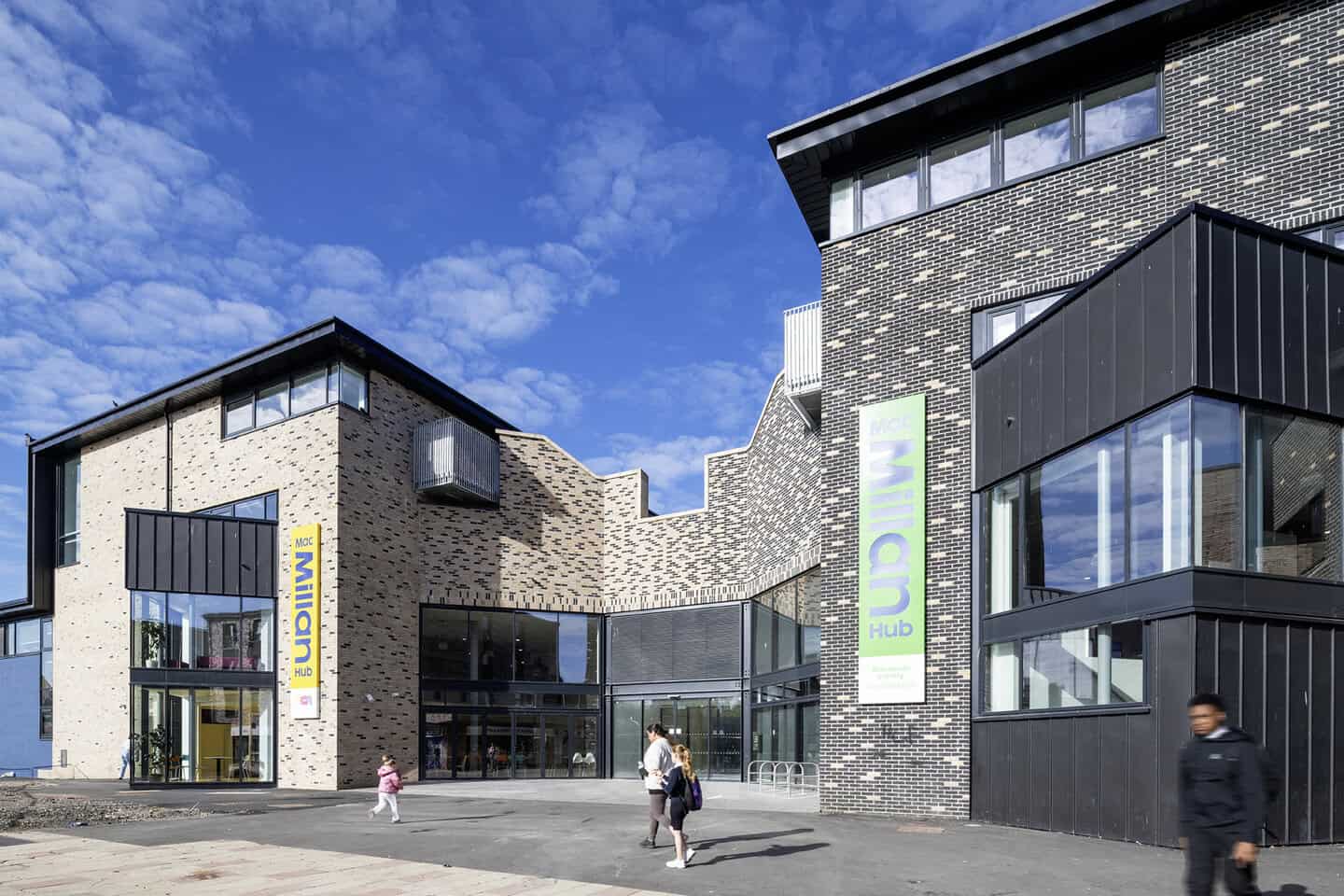
Walk into the brand new MacMillan Hub in the heart of Muirhouse and you will sense the ambitious cultural revolution taking root. There, North Edinburgh Arts (NEA) is providing far more than a community centre. Operating a third of this £15m civic landmark they unite everything from art, dance and music, to textiles, woodwork, and yoga.
The facility houses a 96-seat theatre, a busy 72-seat café, and a wealth of creative spaces – including artist studios, wood workshops, and a music studio. The building also features a hot-desk mezzanine, a third-floor greenhouse, and seeding stock for half-acre community garden.
The hub is a testament to community ambition. The beating heart of this complex is owned and operated by the community. NEA, a locally-led charity, has operated here for 20 years, but their move into this purpose-built facility represents a seismic shift. It is a transition from tenants to landlords; from recipients of regeneration to the architects of it.
The community vision
In 2017, NEA was at a crossroads. They had served the communities of Muirhouse, Granton and Pilton for 20 years, attracting 40,000 visits a year to their creative workshops and theatre. But they were tenants on Council-owned land in a building that was bursting at the seams.
For a community organisation, this was a moment of acute vulnerability. A regeneration plan for the area had been under development since 2008. The risk was real: their arts centre could be squeezed into a smaller space, or lost entirely, if not integrated into the new development.
NEA saw this vulnerability as an opportunity. They proposed a radical integration, putting the community at the centre of the new plans. They launched a Community Asset Transfer to buy their building and the supporting land, and gained overwhelming local support.
Then, they challenged the design itself. NEA appointed their own visionary architects to reimagine their future. Determined to put the community at the heart of the new plans, they worked with the council to develop a proposal that integrated the arts centre into a new town square, alongside a new library, learning and skills hub, and early years centre.
In a validation of their local ambition, the Council bought into this vision, selecting NEA’s architects to design the entire public hub. This was a quiet revolution in urban planning, with a community-led approach resulting in a joined up approach, building in a shared town square, with library and theatre sharing a single, light-filled entrance.
Building community wealth
To make it happen NEA successfully raised over £5 million in capital funding, including £1.7m from the Community Ownership Fund.
Crucially, the NEA third of the Hub is now owned by the community it serves, with 500 members from the local community signed up. This gives a sense of permanence, in an area undergoing new development: whatever other changes happen around them, “we will be here”, as well as integrating accountability and responsiveness into the local community.
NEA is proving that a community arts centre can be a potent economic engine. Recent analysis reveals the sheer scale of their multiplier effect: for every £1 of revenue the organisation receives, it generates £2.37 for the local economy, with approximately 44 percent going to local freelancers. They also make direct grants to local creative projects, having established an R&D fund, supported by Creative Scotland.
NEA is serious about Community Wealth Building, having hosted a “Community Wealth Builder in Residence” with local partner organisations to embed Community Wealth Building in their work, creating a dense network of local organisations all pulling in the same direction.
The organisation is also serious about reshaping what employment looks like in the sector. With a staff team of 24 and a robust Fair Work policy, NEA provides secure, high-quality jobs in an industry often defined by precarity.
Unlocking opportunities
Inside the Hub, the Community Shed provides tools and training for woodworking and repair, while enterprise units offer affordable space for local makers. It is an environment that nurtures skills of local people, answering NEA’s Director Kate Wimpress’s question: “Where does the next generation of working-class artists come from?”.
They come from here.
Kate underlines that there is a great amount of untapped potential in the area, and by providing cultural opportunities for less typically privileged communities, they can unlock a huge wellspring of talent that might otherwise be lost.
Edinburgh is often noted for the ways its geography segregates different groups and social classes. Breaking down the divide of this “stratified city” is central to NEA’s mission. Having a “quality building” is critical, says NEA’s Director Kate Wimpress. It is their first tool to overcome negative preconceptions about this historically stigmatised area of the city. It should “look like an art gallery”, she says, and the work conducted there should be judged on those same standards of excellence.
There is a tangible sense that working-class communities are marginalised within the cultural sphere. Arguments persist that the Edinburgh Festivals are dominated by a small slice of society – those with the financial security to invest the significant sums often required to put on a show. As Wimpress puts it, living in Edinburgh is expensive, so following a creative path “without a safety net” is very hard. So NEA is creating those support structures for people in Muirhouse.
“Culture is ordinary,” says Kate, citing cultural theorist Raymond Williams. It shouldn’t be a luxury reserved for the city centre festivals; it must be woven into the fabric of daily life.
The support net
Reaching this point required navigating a big imbalance of power. While the vision for the MacMillan Hub was shared, the legal reality involved a small local charity negotiating complex contracts with a major City Council and private housing developers.
This is where Community Land Scotland (CLS) became essential.
CLS is the representative body for Scotland’s aspiring and established community landowners. They offer a unique mix of on-the-ground technical support and national advocacy, translating the abstract rights of the Land Reform Acts into concrete reality for local groups.
For NEA, CLS acted as a bridge between the pioneering rural buyouts of the past and the new wave of urban land reform.
“Our movement has definitely been a rural to urban movement,” explains Josh Doble, Director of Policy and Advocacy at Community Land Scotland. “All the early work and the big thinking was done by the rural groups. Now, we are battling to get the urban groups to have the same level of respect and access to economic opportunities. There are clear lines from the inspiration of what has been achieved in rural areas flowing through to what is now happening in our cities.”
This support was vital in challenging the risk-averse culture often found in the public sector regarding community ownership.
“There is a huge section of very important, influential public bodies that have little concept of what the community sector already does,” notes Josh. “Ths community sector is a credible alternative to the public and private sector, generating a much better use of money, because wealth is kept and circulated locally.”
CLS helps to support and spread the work of organisations like NEA, proving that communities are competent developers capable of delivering and operating multi-million-pound infrastructure.
Things can change
Underpinning Kates’s optimism is her experience growing up in Northern Ireland during the Troubles – a time when change felt impossible. But change did happen. For peace to happen, it required people – including senior politicians – to “take big risks”. They demonstrated that politics was capable of achieving lasting change.
Similarly, the social and economic problems in Muirhouse are not insurmountable. Kate knows “things can change”. Things are changing in North Edinburgh, with NEA at the heart of that, and more change is on the way.
In a city often defined by its expensive festivals and historic divides, NEA stands as a beacon of a different kind of culture – one that is rooted locally, grown right here, and driven by the people who call this place home. By taking ownership of their land and asserting a new vision for their community, and for culture, NEA is ensuring that as the skyline of North Edinburgh changes, the community remains central to the story. They drew the blueprints.