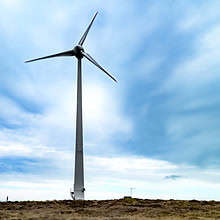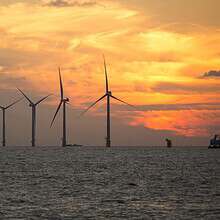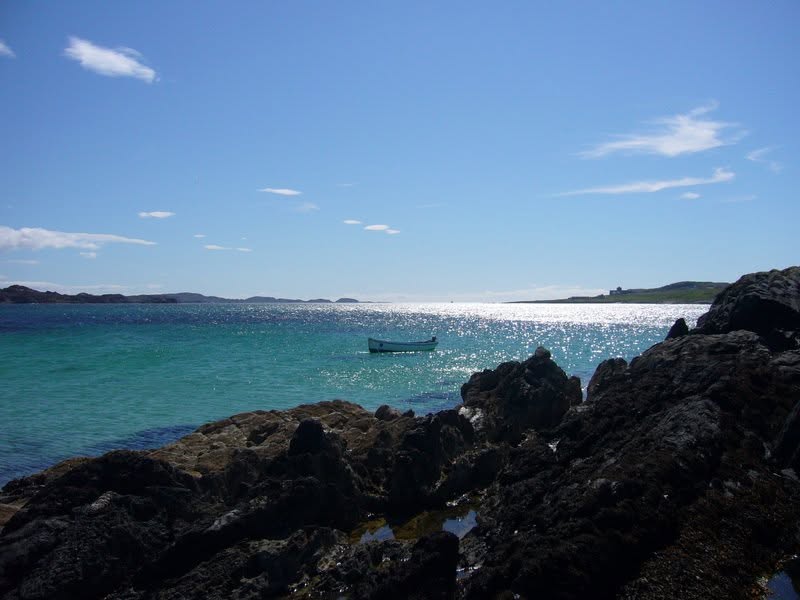
For years we have seen that no landscape is iconic enough to be invulnerable to development as the renewables revolution rolls out across Scotland. Think Flamingo Land. Now a massive development by Iberdrola threatens to change forever the seascape around the islands of Iona, and Mull and off Islay, Jura and Colonsay. The turbines will also be highly visible from Tiree, Staffa and the Treshnish Islands. You can see what it would look like here.
The plans have met mass opposition from islanders.
As we have featured again and again in the Power Shift series, Scotland is already a net exporter of electricity, generating nearly twice as much as it can consume annually, and a very high percentage of energy currently generated in Scotland is being discarded due to lack of grid infrastructure to distribute it, with the taxpayer in Scotland paying £300m annually for windfarms to turn off their turbines. As we have focused on elsewhere, this windfarm will not provide cheaper or greener power to the island communities impacted by its construction and operation. As if to add to the debacle, this week it was revealed that clean energy projects in Scotland are set to pay £1 billion to use the UK’s electricity network while projects south of the border will be paid to connect.
The area covered by this development will be over 50% of the landmass of Mull, 64% of the landmass of Islay, 10 times the size of Colonsay and 51 times the size of Iona. Here’s a mock-up of the view from Iona:
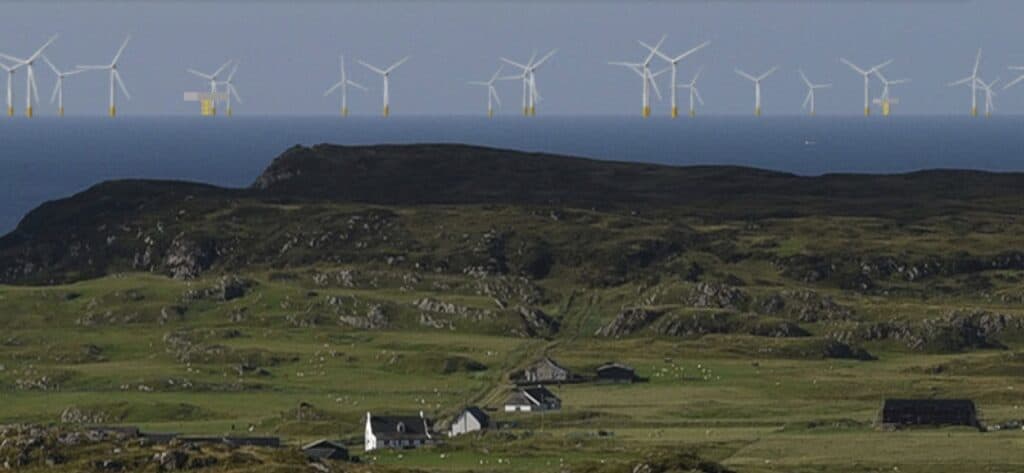
As Hebridean Horizon, a campaign group opposing the development has pointed out: red flashing lights on top of each turbine will destroy the dark-sky environment of the area, and offshore windfarm construction combined with blades rotating at 250mph are proven to threaten bird and fish migratory pathways, marine mammal habitats and behaviour and the general health of the seabed and ecology.
But there is something else to be lost here.
This is not just one of the most iconic places in the whole of Scotland, the birthplace of Christianity in Scotland, the home of the Stevenson family lighthouses of Dubh Artach and the Calf of Man, but also legendary home of Balfour’s Bay on Erraid, off Mull, immortalised in Robert Louis Stevenson’s Kidnapped. The view from Erraid will be entirely desecrated.
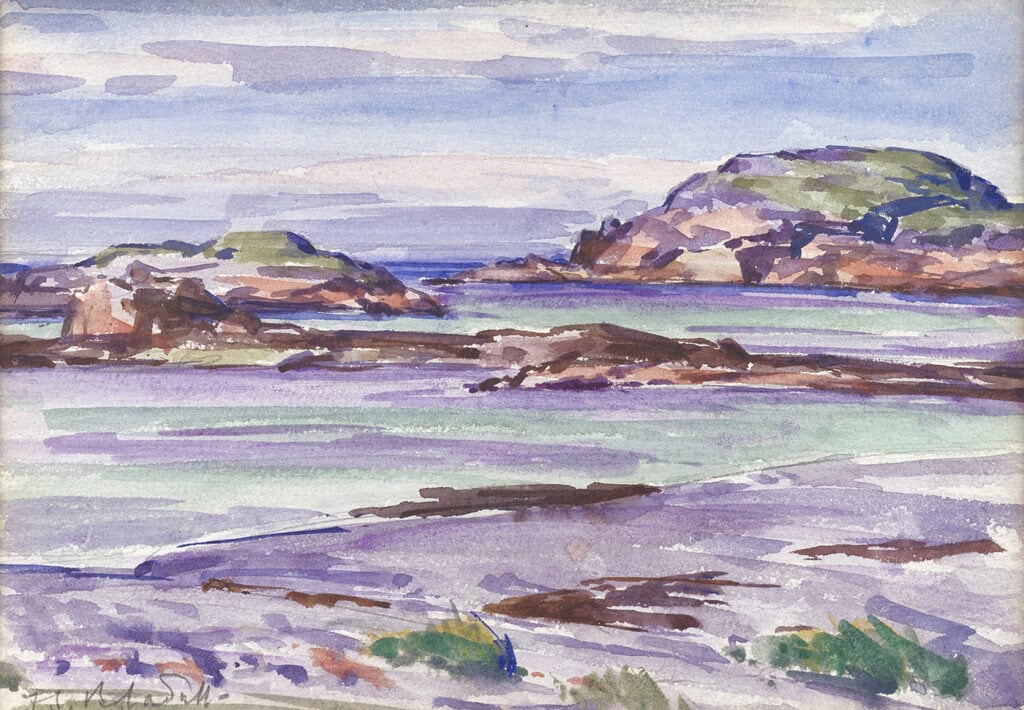
These are the landscapes and seascapes that drew the Scottish Colourist painters, F.C.B. Cadell (1883-1937) and Samuel Peploe (1871-1935), and John Maclauchlan Milne (1885-1957) to paint Iona’s white sands and big skies. The view depicted in this famous painting by Cadell (Iona, c.1925) would now be covered in wind turbines.
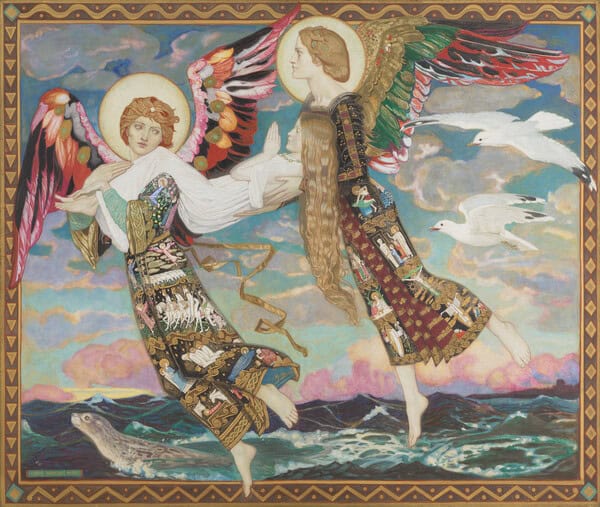
The appreciation of the wild beauty and serenity of these islands will be lost forever if these developments are allowed to proceed. But with it too, places of ancient lore, the home of Fingal, the home of St Bride, as depicted here by John Duncan (1913). Duncan’s seascape, like Caddel’s, would be transformed by Iberdrola’s development.
The proposal threatens to desecrate landscapes and seascapes that have incalculable cultural and ecological significance and natural beauty. But they are also living communities that depend on visitors that are drawn to the very qualities that are under threat: peacefulness, wilderness, and unspoiled beauty.
What is the gain from such a proposal?
The proposed MachairWind development by Iberdrola is an industrial development on a scale never before seen in the Inner Hebrides, but as Hebridean Horizons have said: “Island communities will not receive cheaper electricity, community benefits won’t be confirmed until after approval is given, livelihoods may be destroyed and the long-term visual impact will remain long after the profits have gone into the pockets of Iberdola’s shareholders.”
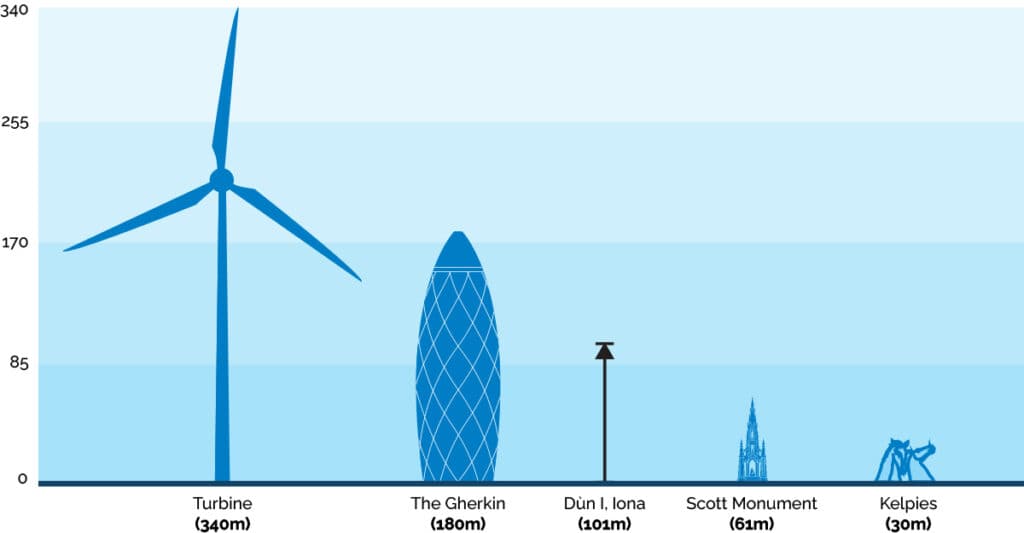
As with so many of the projects we have covered in the Power Shift project so far, the gains to local communities are often negligible, while the scale of impact and intrusion is often vast, and potentially everlasting. The proposal would cover 448 km² of sea, with at least 91 turbines standing 340 metres high, located within 6 miles of Colonsay, 10 miles of Islay, and 13 miles of Mull and Iona. This graphic shows the scale involved:
It’s difficult to imagine this taking place in any other European country. Iberdrola is a Spanish electric utility company based in Bilbao, which owns ScottishPower Renewables (SPR) and the main beneficiary of this project will be Iberdrola’s shareholders. We have covered mostly onshore renewables developments in the Power Shift but such a project as this shows the same lessons and problems are found in – especially near-shore renewables projects.
For the avoidance of any doubt, this is not to argue against renewable energy, nor should this be seen to be any part of the anti-Net Zero agenda, which is riddled with disinfornation and bad faith actors. Renewable energy and the decarbonisation of the economy is essential and overdue.
At this time we need desperately to innovate around clean energy and solutions to our climate crisis. But MachairWind is a travesty and an extraordinary exercise in self-harm.