What happens when no one is watching? When local stories go untold, communities lose more than news – they lose connection, voice and trust.
At a time when the renewable energy transition is reshaping communities, independent, community-rooted media plays a vital role in ensuring local voices are heard and experiences represented. But in many places, that critical coverage is missing.
The UK Local News Report, produced by the Public Interest News Foundation in 2025, found that around 4.4 million people in the UK live in a news desert – areas with no local news outlet solely covering that local authority. Roughly one in ten Local Authority Districts (37 in total) fall into this category.
At the same time, more than one in three local news outlets are owned by just three companies – Newsquest, Reach, and Iconic Media (formerly National World) – corporate publishers that extract wealth from communities rather than building it locally. Independent media is often all that prevents further decline: in nearly half of the districts served by a single title, it is an independent provider that stops the area from becoming a complete news desert.
Without a local news provider, a vacuum emerges – a space where mis- and dis-information can spread, and where political actors can exploit division and polarisation. This is something we’re seeing happen in relation to the renewables boom.
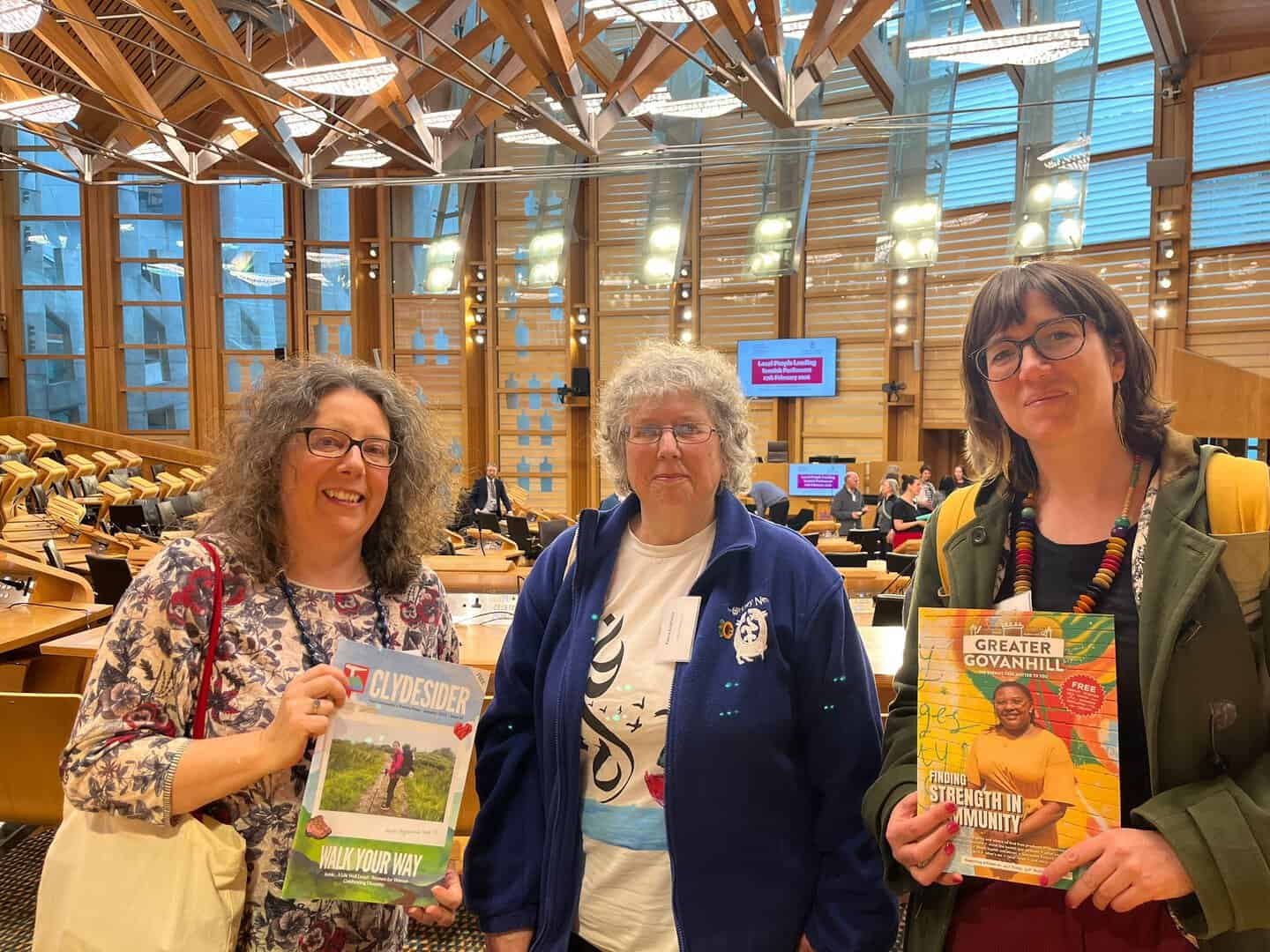
Trusted, locally-owned media connects communities with the people and places around them. It reflects local voices back to the community, fostering empathy, shared understanding, identity, and pride. It also enables participation in community life – whether through volunteering, attending events, or voting – while creating space for dialogue and debate on the issues that matter most.
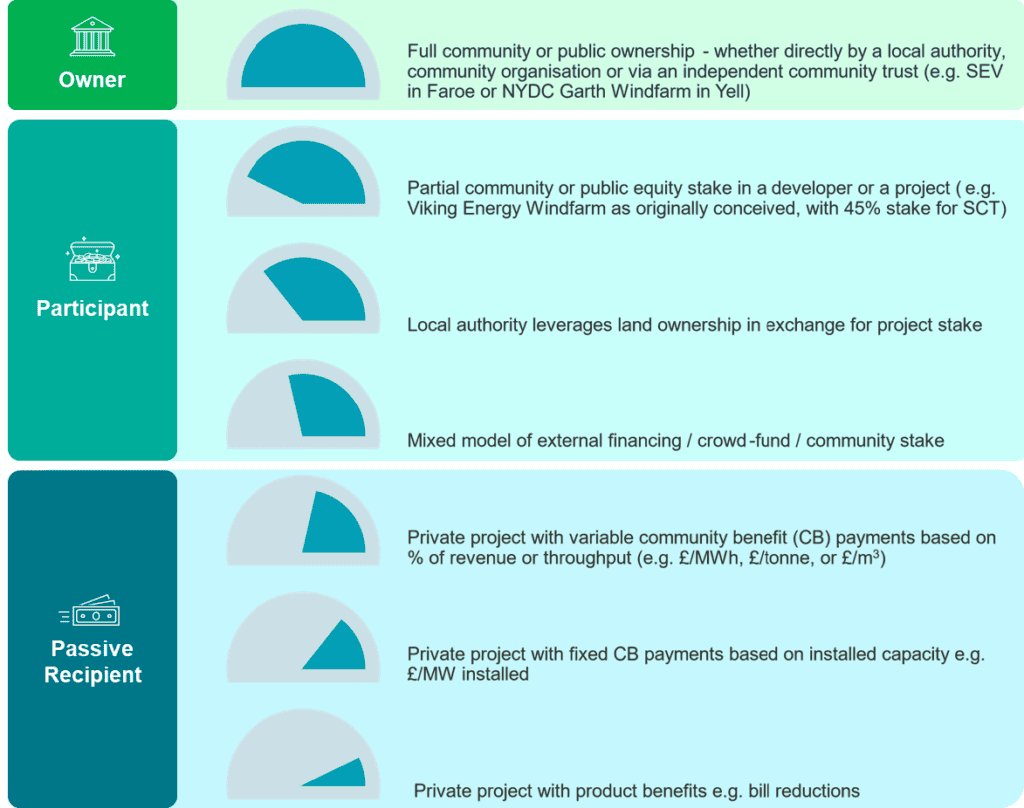
As this magazine explores, Scotland’s energy transition is also prompting a wider conversation about ownership. In renewables, models range from communities as passive recipients of benefit funds to active participants and, in some cases, full owners of projects. A similar dynamic exists in the media.
In corporate extractive models, communities often have less say in how their stories are told. When media is community-owned, it can reflect those stories more authentically and keep value – both economic and social – within the place it serves.
As Sarah Ade of the Glenkens Gazette notes, “Hyper-local, independent news… offers a platform for people to unite in a shared vision and share values; it fosters constructive debate and brings communities together instead of fragmenting them.”
Local journalism also plays a critical role in protecting services and ensuring communities are heard. Julian Calvert of The Lochside Press highlights how distance from decision-making centres increases the need for strong local reporting: “Our local council headquarters is 65 miles away… locally-based journalism is vital in giving rural communities a voice and fighting to protect their services.”
At the same time, independent media provides an essential counterweight to the noise of online platforms. Jane Cruikshank, editor of The Bellman, says: “Social media provides too easy a platform for ill-informed opinion that divides a community. Independent local reporting keeps everyone informed in a way that national press cannot, particularly on issues like energy infrastructure that have a big local impact.”
For rural and remote communities, this role is even more pronounced as Silvia Muras of the Kyle Chronicle highlights: “Our project breaks down barriers to accessing meaningful local information for people in sparsely populated areas, especially older residents. It gives a platform for local voices to be heard, at a level national and corporate media cannot offer.”
Independent, community-owned journalism is not a luxury – it is essential to stronger, more informed and more connected communities.
This article is from the print edition of our magazine The Power Shift.
If you would like to receive a copy of The Power Shift magazine, you can order online here.
If you are interested in joining the new Environmental Journalism Network that is open to journalists, campaigners, researchers and experts, sign up here.